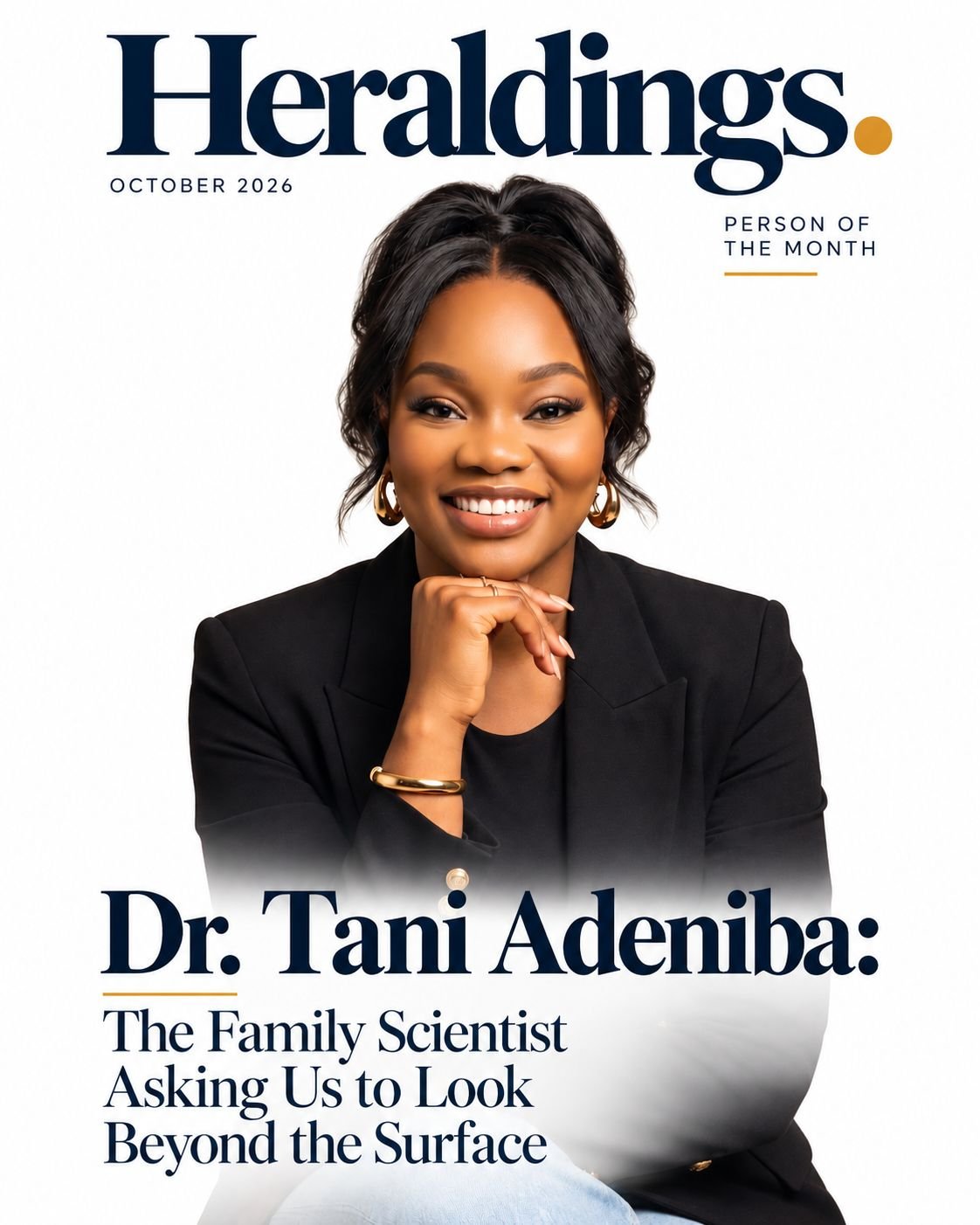

Adora Igunma-Ogunyomi works across education, teacher development and learning
design. She is a learning and performance specialist, creative entrepreneur and
founder of The Fresh Look Africa, an initiative focused on developing teachers and
strengthening education across Africa. Her journey has taken her from studying
science and education in Nigeria to building a career in Canada, where she has
continued to explore different ways to help people learn and grow. Along the way,
she has also built creative ventures of her own, finding different ways to turn ideas
into something useful for others.
What I find interesting about Adora is the range of spaces she has explored and how
learning connects them. Across her work, one idea keeps coming up: learning
should be more than completing a course, earning a certificate or passing an
examination. It should change what a person understands and what they are able to
do.
We are used to measuring learning by what people complete. A student passes an
examination, a teacher attends a training programme, an employee earns a
certificate, and we move on to the next thing. But completing something and actually
growing from the experience are not necessarily the same.
Adora has worked with teachers, supported learning and development in
organisations, and explored how children can continue to develop their abilities in a
world increasingly shaped by artificial intelligence. Although these areas of work are
different, they share a common concern: helping people learn in ways they can put
to use.
Her academic background reflects an interest in both science and education. She
studied Biology Education at the University of Lagos before pursuing a master’s
degree in Cell Biology and Genetics at the same university. She later earned a
Master of Education in Curriculum and Instruction from the University of New
Brunswick in Canada. This combination of experiences has shaped her
understanding of education and how people learn.
In 2020, she founded The Fresh Look Africa, an initiative focused on teacher
professional development. Through its programmes, mentorship, conferences and
Skilled Teacher Academy, the organisation creates opportunities for teachers to
strengthen their practice and continue developing professionally. It has reached
more than 5,000 educators and built a community of over 300 teachers.
I think this part of her work raises an important point about education. We spend a lot
of time discussing what children need to learn and how we can improve their
performance, but we sometimes pay less attention to the people responsible for
helping them learn in the first place.
Teachers are expected to support different kinds of learners, respond to changing
classroom needs and prepare children for a world that is not standing still. They
need opportunities to develop their own skills, too. Supporting teachers is an
important part of improving education.
Another aspect of Adora’s story that stands out to me is her willingness to step into
unfamiliar territory. Growth often means trying things we have never done before and
finding our footing along the way. For Adora, this has been part of both her
professional and personal journey.
In 2021, she moved from Nigeria to Canada, having never lived outside Nigeria
before. The move came during the COVID-19 pandemic, and her first weeks
involved isolation and adjusting to an unfamiliar education system through online
classes. Beyond continuing her education and building her career, she had to
navigate new systems, find community and adjust to life in a different country.
In the years that followed, she also built her business, got married, became a mother
and moved between places. Each transition brought its own demands. Her
experience is a reminder that learning does not happen only in classrooms or
training programmes. Sometimes, it comes from adapting to change, figuring things
out and finding the confidence to keep moving even when the way forward is not
entirely clear.
Her professional experience in Canada also broadened the scope of her work. She
worked in learning and development, inclusion and educational resource design. She
facilitated sessions on diversity, inclusion and anti-racism through the Multicultural
Association of Fredericton and later worked with Anglophone West School District,
supporting inclusive education and collaborating with educators and school leaders.
These experiences gave her practical insight into how organisations can identify
learning needs, develop useful training resources and assess whether training is
making a difference.
Today, as an independent learning and development consultant, she helps
organisations identify learning needs, develop training and e-learning resources, and
evaluate their effectiveness. Her focus is not simply on delivering information, but on
helping people use what they have learnt.
There is also a creative side to Adora that I find interesting. Beyond education and
learning design, she has built ADIV Gifts Collection, where she curates gifts, gift
boxes and hampers in Winnipeg, and ADIV Finds, where she shares gift guides and
ideas for thoughtful giving.
These ventures show another side of her entrepreneurial journey. While her
education work focuses on helping people develop, her gift businesses offer a
different way to express creativity and connect with people.
Her work is evolving in other ways, too. She is now helping people aged 40 and
above show up more confidently online and turn what they know into content. Many
people have spent years learning, working and building experience without
necessarily thinking about how much of that knowledge could be useful to others.
Helping people share what they know brings another dimension to Adora’s work. It is
about recognising the value of experience and finding ways to communicate it so
that other people can learn from it.
This has become particularly relevant as artificial intelligence changes how we
access information and complete tasks.
AI tools can help us write, research, create and solve problems more quickly. For
many learners, they open up useful possibilities. But they also raise concerns about
how we distinguish between producing an answer and understanding it.
A child might submit an impressive assignment with the help of AI but struggle to
explain the ideas behind it. The work may be complete, but that does not
automatically mean the child has understood the subject or developed the ability to
reason through a problem.
For me, this is an important conversation about education and technology. It is not
enough to ask whether children can use AI or whether it makes them more
productive. We also need to ensure they are developing the judgement, curiosity,
problem-solving skills and independent thinking they will need beyond the
classroom.
This brings us back to an idea that runs through Adora’s work: learning should lead
to something more than the completion of a task. A training programme should help
people improve their work. A learning resource should make a concept easier to
understand and apply. And children should be able to use what they learn beyond
the assignments they submit.
Looking at Adora’s journey, from developing teachers through The Fresh Look Africa
to supporting organisations and exploring learning in an increasingly AI-driven world,
I see a consistent interest in making learning useful in everyday life.
Whether she is helping teachers develop professionally, designing learning
experiences or encouraging people to share their knowledge, her work points to the
importance of moving beyond simply acquiring information.
Ultimately, what matters is what people can do with what they have learnt. They
should leave a learning experience better equipped to think, adapt and take on what
comes next.