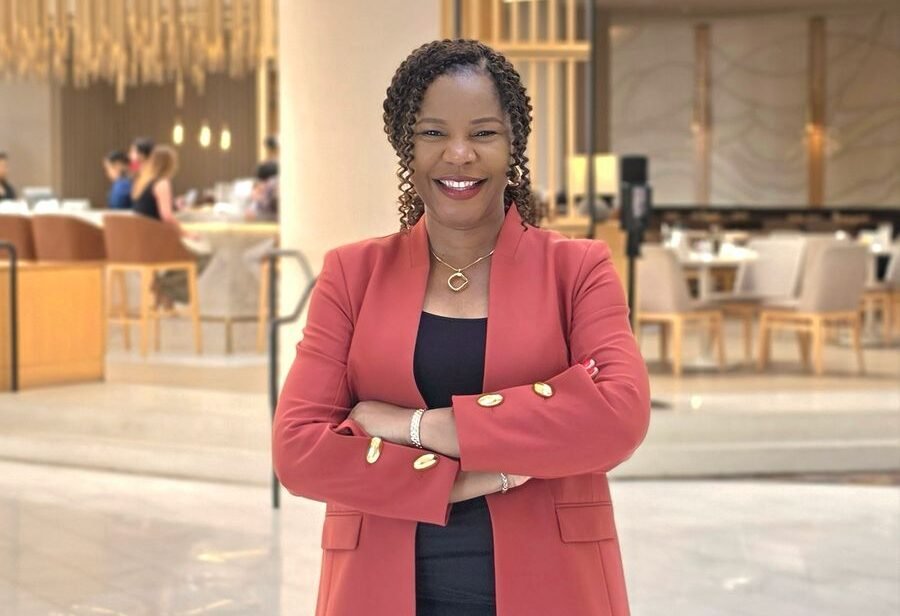

There are people whose professional achievements are impressive on their own, and then there are people whose stories make you appreciate those achievements even more. Dr. Mercy Ogbonne Umeri belongs in the latter category.
Today, she is an educator, researcher, author, and human resources expert with over 20 years of experience across the private, government, and nonprofit sectors. She is an Assistant Teaching Professor and MiniMPA Coordinator at the Hugo Wall School of Public Affairs at Wichita State University in Wichita, Kansas, where she teaches Human Resources, Strategic Planning, and Public Administration. She holds a doctorate in Educational Leadership and Administration and a Master’s degree in Public Administration from Wichita State University. She is also a Senior Certified Professional of the Society for Human Resource Management (SHRM-SCP).
Her work also extends beyond the university. She advocates for girls’ and women’s rights, education and social equity, mentors young people and remains connected to initiatives supporting communities in Nigeria.
It is quite a journey. But looking through her story, I found myself paying attention to more than the qualifications and positions. I wanted to understand the experiences behind the woman doing this work today. And one detail caught my attention almost immediately.
Dr. Mercy is an Ada. In Igbo culture, an Ada is the first daughter in a family. She was the first daughter in a family of six children, and from a young age, she learned to look out for her siblings and be resourceful. When you consider the thoughtfulness and sense of responsibility that seem to run through her life, you begin to understand why this detail feels significant. You almost want to say, of course!
But her instinct to look out for others did not begin and end at home. As a child, she stood up for her siblings when they were bullied and became a voice for friends who were treated unfairly. She had little patience for injustice, even before she had the language to describe advocacy.
She was also a curious child who loved reading, asking questions and imagining possibilities beyond her immediate surroundings. Although her family did not have much, her parents believed that their daughters deserved the same opportunities for education as their sons. School became a place where she could explore, learn and imagine a different future. She dreamed of travelling the world and one day receiving an American education.
That dream would take years to become reality, but the experiences preparing her for it had already begun.
Her early years were filled with opportunities to express herself. Through the church choir, drama group and children’s church, she learned to sing, act and speak before an audience. In secondary school, she became social prefect, joined the drama club and eventually led the Literary and Debating Society. She represented her school in speech competitions and debates, developing the confidence to communicate her ideas and defend her positions.
She had wanted to study Law, but her academic journey took her to the University of Nigeria, Nsukka, where she studied Theatre Arts and Film. It was not an easy experience. Her family could not afford to support her through university, so she took on menial jobs to make ends meet and complete her education.
Theatre gave her more than a degree. It strengthened her communication skills and exposed her to the power of stories to reflect society, question injustice and raise awareness. Looking at the work she does today, it is interesting to see how those early experiences found their way into her professional life.
One of the most important turning points came during her National Youth Service Corps year in Kano.
Posted to a secondary school to teach English, she also introduced Literature-in-English and started an after-school programme for some of the girls. It was there that her understanding of education began to take on a deeper meaning. She encountered girls whose access to education was far from guaranteed and saw how easily their futures could be limited by circumstances beyond their control.
For her, girls’ education stopped being an abstract cause. She could see what was at stake. Education was not a privilege to be granted to a few. It was a right, and one that many girls were being denied.
That experience stayed with her. After NYSC, she spent seven years working with nonprofit organisations in Kano and Gombe, partnering with communities and schools, supporting educational initiatives and contributing to programmes that improved people’s lives. Her work also exposed her to the needs of small businesses and the importance of building people’s capacity.
When security threats forced her family to leave the North, she moved to Abuja and founded Hermon Consult, a management consulting firm. Through the organisation, she worked with entrepreneurs, employees, government agencies and private organisations, providing capacity-building support for personal and business growth.
By this point, she had moved through several professional spaces, but there was still something she wanted to pursue. The dream of receiving an American education, which had lived with her since childhood, had not disappeared.
At 36, she made the decision to move to the United States for graduate studies. She did not make the move alone. She left Nigeria with three young children, aged seven, five and one. Her youngest was still being breastfed, and her husband remained in Nigeria initially to continue running Hermon Consult.
This was a major transition. She was entering a new country, learning an unfamiliar educational system and adjusting to a different way of life while caring for three young children without the childcare support she had been accustomed to. She was also beginning again academically, as a first-generation student navigating an environment in which she had no established blueprint to follow.
It is easy to look at the academic qualifications she holds today and move quickly past this chapter. But it deserves a moment. Pursuing a new degree is one thing. Doing so while raising three young children, adapting to a new country and building a life away from familiar support systems is another.
She enrolled in the Master of Public Administration programme at Wichita State University. During her studies, she gave her first TEDx talk, sharing a message about the power of dreaming and encouraging others to believe that they could win too.
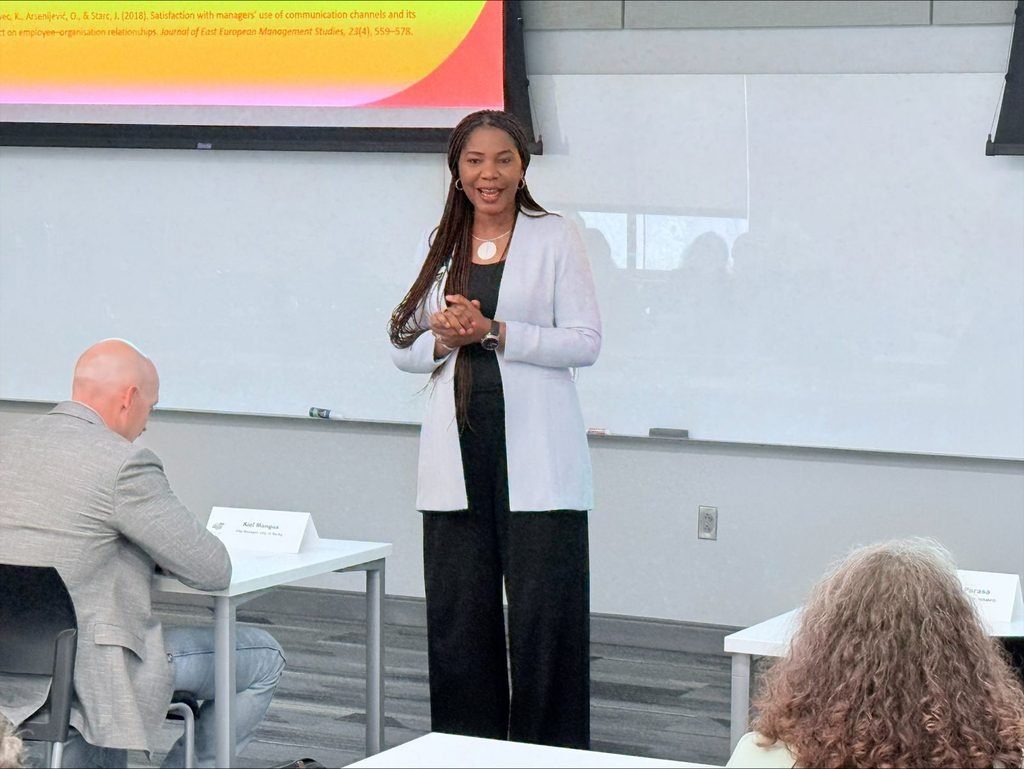
A few weeks after completing her master’s degree, she was accepted into the doctoral programme in Educational Leadership and Administration. She also became a graduate teaching assistant, teaching Human Resources to graduate students.
There is something particularly satisfying about this part of her story. Years earlier, she had stood before a classroom in Kano, teaching secondary school students. Now, she was teaching graduate students at an American university. The classroom had changed, the students were different, and the scale of her work had expanded, but the connection to education remained.
Today, she has a faculty position at the same university where she pursued her postgraduate education. Beyond teaching, she coordinates the MiniMPA professional development programme and contributes to recruitment activities within the Hugo Wall School of Public Affairs.
Her academic work has not taken her away from the questions that first drew her into advocacy. In 2022, she wrote an article titled The Education We Have Vs. The Education We Deserve, published in Leadership Newspaper. She examined the challenges within Nigeria’s education system, including inadequate infrastructure, limited access, the condition of public schools and the need to invest in teachers.
What makes her position particularly interesting is that she is not speaking about public education from a distance. She is a product of Nigeria’s public school system. It was the education she received that helped give her the opportunities and voice she has today. She knows what the system can make possible, and she is equally aware of what happens when it fails the children who depend on it.
Her concerns are especially strong when it comes to girls. Her experience in Northern Nigeria remains an important part of how she sees the issue. She believes policies must do more to protect girls, including making it illegal to marry girls before the age of 18 and ensuring that no school-ready child is left out of school.
Even while living and working in the United States, she has maintained a connection to initiatives in Nigeria. She has consistently sponsored children at KNOSK-100 Naira-a-Day School in Kuje, Abuja, and serves as Diaspora Chair for She Forum Africa. She also mentors young people through Youthspace Africa.
This continued involvement matters because it shows that distance has not made her less invested in the communities and causes that shaped her. She sees Africans in the diaspora as having an important role to play through knowledge-sharing, mentorship, resources, partnerships and advocacy. For her, living abroad does not have to mean disconnecting from home.
There is also a more personal side to the way she thinks about learning and growth. In 2024, she published Forty-Five Things I Know for Sure: Letters to My Younger Self. She has kept a journal since she was ten, using writing to process her thoughts and make sense of her experiences. At 45, she turned some of the lessons gathered over the years into 45 letters to her younger self.
I find this detail fascinating because it brings us back to the curious little girl who loved reading, writing and asking questions. The woman who once searched for knowledge is now putting some of what she has learned into a book for someone else to discover. It is a way of making her experiences useful beyond her own life.
But perhaps one of the strongest influences behind her values is her mother. Dr. Mercy speaks of watching her mother take all the lemons life threw at her and make lemonade. Her mother taught her through the way she lived, and the values of faith, perseverance and empathy continue to shape her. She lost her mother on 3 November 2025, and her absence remains deeply felt. Yet the lessons she left behind continue to find expression in the work her daughter does.
When I look at Dr. Mercy’s journey, I see a woman who has kept making room for growth. A young girl who loved learning became a teacher. A teacher who saw girls being denied opportunities became an advocate. An entrepreneur who had built a career in Nigeria returned to the classroom as a student, then became a university lecturer. And through all these changes, she has continued to find ways to contribute to the lives of others.
Perhaps that is the thread running through her story. Not simply the pursuit of qualifications or the accumulation of professional achievements, but a willingness to keep learning, to take opportunities seriously and to use whatever she gains to make a difference.
There is something I particularly appreciate about the advice she gives young Nigerian women. She does not suggest that there is one perfect route to building a meaningful life. Her own journey is evidence of that. She encourages young women to keep learning, seek mentors, speak up, take initiative and recognise their own achievements. She also reminds them to be proud of where they come from.
One line from her advice stays with me: “You belong in every room you step into, and your voice and vision are needed.”
It is a fitting message from a woman who has had to enter unfamiliar rooms, find her footing, learn new systems and create opportunities for herself. And perhaps, having done so, she understands why it matters to remind other women that they belong there too.
Dr. Mercy’s story is not simply about how far she has travelled. It is about what she has carried with her along the way: her curiosity, her convictions, her faith, her commitment to education and her desire to see other people given the opportunity to thrive. Those things have remained, even as the rooms have changed.