

Onyekachukwu Nwakoby is a Nigeria-licensed pharmacist, clinical research professional based in Canada, healthcare advocate and founder of MEDGLOBE Initiative, an organisation committed to improving access to health education and essential health resources.
Since founding MEDGLOBE Initiative in 2018, she has been working to address practical healthcare needs through medical outreaches, health education, hygiene promotion, maternal and mental health awareness, and initiatives focused on reducing drug misuse. The organisation has reached more than 3,500 beneficiaries across Nigeria and Canada.
One of her current priorities is expanding access to Basic Life Support (BLS) education in Nigeria, particularly among young people and teachers. Through this work, she hopes to equip more people with the knowledge and skills to respond appropriately during medical emergencies.
In this interview with The Heraldings (TH), we caught up with Onyekachukwu Nwakoby, popularly known as Kachi, to discuss her journey from pharmacy practice in Nigeria to clinical research in Canada, the inspiration behind MEDGLOBE Initiative, the importance of community-centred healthcare, and her vision for making lifesaving skills accessible to more Nigerians.
TH: Beyond your professional profile, who is Onyekachukwu Nwakoby? What values, experiences, and beliefs have shaped the woman you are today?
Kachi: Beyond my professional titles and the work I do, I am someone who believes deeply in service, faith, and the responsibility we each have to make a difference with what we have been given.
My journey has taught me that impact is not always about having the most resources, the loudest voice, or the most influential position. Sometimes, it begins with noticing a need, being willing to take responsibility, and deciding to do something about it. That conviction has shaped both my professional career and my commitment to community service.
My faith is an important part of who I am and how I approach life. There is a phrase that has stayed with me throughout my journey: “Begin the mission, the means will come.” It reminds me that we do not always need to have everything figured out before taking the first step. We can begin with what we have, remain faithful to the work, and trust that the resources, relationships, and opportunities we need will come along the way.
I am also deeply influenced by the belief that people deserve to be treated with dignity, regardless of their circumstances. Whether I am working in clinical research, collaborating with colleagues, or serving a community through MEDGLOBE Initiative, I want my work to have a purpose beyond simply completing a task.
I am still learning, growing, and figuring things out as I go. I have learned that meaningful work requires patience, humility, consistency, and the willingness to keep showing up even when the results are not immediate. Ultimately, I hope to be someone who uses her knowledge, opportunities, and experiences to make life a little better for others.
TH: You are a Nigeria-licensed pharmacist and clinical research professional based in Canada. How have your professional experiences influenced the way you think about healthcare and community impact?
Kachi: My journey from pharmacy practice in Nigeria to clinical research in Canada has given me a broader appreciation of healthcare and the different ways we can contribute to improving it.
My foundation in pharmacy taught me the importance of medicines, patient counselling, medication safety, and helping people make informed decisions about their health. As I transitioned into clinical research, I began to see another dimension of healthcare: the work that goes into evaluating potential treatments, protecting participants, maintaining data integrity, and generating the evidence that informs medical decisions.
Working in clinical research has reinforced the importance of evidence, accountability, collaboration, and patient safety. Every decision made during a clinical trial has implications for the people who participate in it and, ultimately, for the patients who may benefit from the treatments being studied.
At the same time, my community health volunteer work has taught me that advancing healthcare requires more than developing treatments or making medicines available. People also need access to reliable health information, the knowledge to recognise health risks, and the resources to act on what they know.
These experiences have shaped my understanding of impact as something that happens at different points along the healthcare journey. It can begin with research that advances medical knowledge, continue through the responsible use of medicines, and extend into communities through health education, prevention, and access to essential resources.
I do not see my work in clinical research and my community service as separate worlds. They are different expressions of my commitment to better health outcomes. One allows me to contribute to the advancement of healthcare through research; the other allows me to work more directly with communities and address practical health needs.
Together, they continually remind me that healthcare must not only advance scientifically but also remain connected to the people it is ultimately meant to serve.
TH: You founded MEDGLOBE Initiative in 2018. What inspired you to start the organisation, and what need were you hoping to address?
Kachi: I founded MEDGLOBE Initiative in 2018 out of a desire to translate my passion for healthcare into practical community action.
As a pharmacist, I understood the importance of health education, medication adherence, and access to essential health resources. But I also recognised that knowledge and resources do not always reach the people who need them most. A person may have questions about their medication but lack access to reliable information. A family may need basic health resources that are difficult to obtain. Someone may want to make better health decisions but not have the information or support to do so.
I wanted to contribute to addressing these gaps in a practical way.
MEDGLOBE Initiative was established to promote health education, encourage medication adherence, improve access to essential health resources, and support healthier communities. Over time, our work has included free medical outreaches, health education, hygiene promotion, maternal and mental health awareness, and initiatives focused on reducing drug misuse.
Since its establishment, the initiative has reached more than 3,500 beneficiaries across Nigeria and Canada through its programmes and outreach activities.
Building MEDGLOBE has also been a lesson in starting before everything is perfect. A significant portion of our work has been personally funded, particularly in the early years. We have had to work within available resources, prioritise needs, mobilise volunteers, and seek opportunities to collaborate with others who share our vision.
I am proud of what we have been able to do, but I see it as the beginning rather than the destination. My vision is for MEDGLOBE to grow into an organisation that can deliver sustainable, community-centred health programmes, build strong partnerships, and reach more people.
For me, founding MEDGLOBE was about moving from recognising a need to taking responsibility for doing something about it. It remains a reminder that we do not have to wait until we have everything before we begin contributing to change.
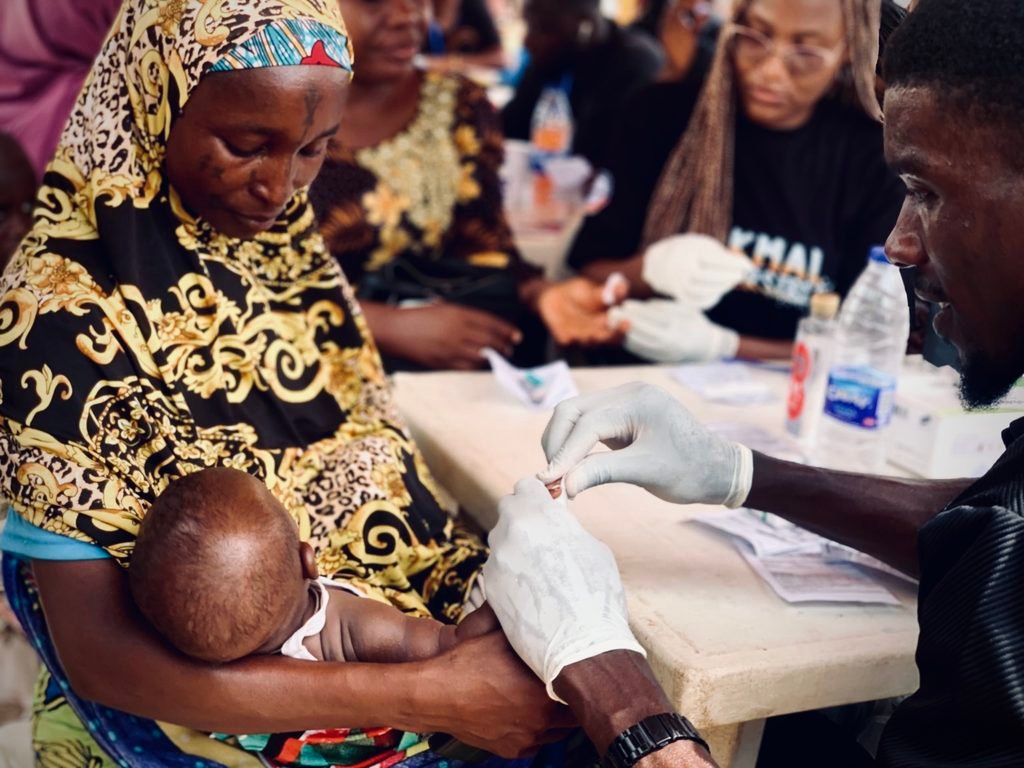
TH: MEDGLOBE Initiative works to improve access to health education and essential health resources. What does meaningful community health impact look like to you?
Kachi: Meaningful community health impact goes beyond the number of people reached or the resources distributed. Those measures are important, but I believe impact is most meaningful when it improves people’s ability to care for themselves, make informed decisions, and live with greater dignity.
For example, providing someone with medication is valuable, but helping them understand how to take it correctly and why adherence matters can make that intervention more effective. Distributing hygiene packs can address immediate needs, but taking the time to connect with the people receiving them can also affirm their dignity and remind them that they are seen and valued.
That understanding influences how we approach our work at MEDGLOBE Initiative. We want our programmes to address immediate needs while also creating opportunities for education, prevention, and lasting behavioural change.
I have also learned that community impact is not always dramatic. Sometimes, it is a conversation that helps someone understand a health condition, a resource that makes daily life a little easier, or a skill that enables someone to respond confidently in an emergency.
Meaningful impact also requires listening. Communities should not simply be recipients of interventions designed elsewhere; their experiences, priorities, and circumstances should help shape the solutions intended for them.
Ultimately, I want MEDGLOBE’s work to be measured not only by what we provide, but by what people are better equipped to do afterwards. Can they make a more informed health decision? Do they have access to a resource they previously lacked? Have they acquired a skill that could protect a life? Do they feel that their wellbeing matters?
Those are the kinds of outcomes that make community health work meaningful to me.
TH: One of your current priorities is expanding access to Basic Life Support (BLS) education in Nigeria. What made this particular cause important to you, and why do you believe lifesaving skills should be accessible to everyone, not just healthcare professionals?
Kachi: The BLS project grew from a simple but important realisation: emergencies can happen anywhere, and the person present when one occurs may not be a healthcare professional.
Basic Life Support education teaches people how to recognise certain life-threatening emergencies and respond appropriately, including performing CPR and using an automated external defibrillator where available and appropriate. These skills can be critical while someone waits for emergency medical assistance.
As a pharmacist and healthcare professional, I appreciate the importance of clinical knowledge and the specialised training required to provide medical care. But I also recognise that the first response to an emergency often begins outside a hospital, clinic, or other formal healthcare setting.
A medical emergency can occur in a classroom, at home, during a sporting activity, or in a public space. If the people present do not know what to do, valuable time may be lost. Equipping more people with appropriate training can help them recognise an emergency, seek help promptly, and provide an initial response within the limits of their training.
This is why I believe lifesaving education should not be confined to healthcare professionals. People do not need to become clinicians to learn how to respond to an emergency. They do, however, need access to appropriate instruction, practical training, and opportunities to refresh their skills.
Through MEDGLOBE Initiative, we have been working to expand access to free BLS training in Nigeria. This work is especially meaningful to me because it represents a shift from providing resources after a need arises to equipping people with knowledge and skills that may help them respond when an emergency occurs.
Our ambition is to make this knowledge more accessible and to build a culture in which emergency preparedness is recognised as a shared responsibility.
I believe that lifesaving skills should not be a privilege reserved for people who can afford specialised training. With the right training and support, more people can be better prepared to help when it matters most.
TH: Through your work, you are exploring ways to bring BLS education into schools and equip students and teachers with these skills. What would you like to see change in how Nigerian schools approach emergency preparedness?
Kachi: I would like to see emergency preparedness become a more intentional part of how Nigerian schools think about student safety and practical life skills.
Schools are not only places where children acquire academic knowledge; they are also environments where they develop the confidence, judgement, and skills they carry into adulthood. Teaching students and teachers how to recognise an emergency and respond appropriately could therefore have benefits that extend beyond the school environment.
Imagine a student who knows how to identify when someone may need urgent help, understands the importance of contacting emergency services, and has received appropriate practical training in CPR. Imagine a teacher who feels more prepared to respond while professional assistance is being arranged. These are skills that could be useful in school, at home, and throughout their lives.
Through MEDGLOBE Initiative, we are working towards expanding free BLS education to secondary schools in Nigeria, with students and teachers as key groups we hope to reach. The broader vision is to make lifesaving education more accessible while encouraging schools to take a proactive approach to emergency readiness.
For this to be effective, however, it cannot be limited to a one-off presentation. Schools need suitable training, qualified instructors, appropriate equipment, clear procedures for responding to emergencies, and opportunities for learners to practise and refresh their skills. Training must also be age-appropriate and delivered in line with recognised standards.
I would love to see stronger collaboration between schools, healthcare professionals, training organisations, community initiatives, and relevant public institutions to make this possible.
My hope is that emergency preparedness will increasingly be viewed not as an optional extra, but as an important component of a safe learning environment. We may not be able to prevent every emergency, but we can work towards ensuring that more people know how to respond when one occurs.
For MEDGLOBE, this school-based initiative is an opportunity to invest in knowledge that students and teachers can carry into their families and communities, potentially extending the benefits far beyond the classroom.
TH: Leading a community health initiative across different contexts, including Nigeria and Canada, must come with its own challenges. What has this journey taught you about building sustainable initiatives and creating impact with limited resources?
Kachi: One of the greatest lessons has been learning the difference between having a passion for a cause and building an initiative that can sustain that cause over time.
Passion can get you started, but sustainability requires planning, accountability, partnerships, and a realistic understanding of what your resources can support.
We have partnered with reputable pharmaceutical organisations, as well as other NGOs and community partners. These collaborations are important because meaningful community health work is rarely the achievement of one person or organisation. It takes different people bringing their resources, expertise and networks together.
Building these relationships while maintaining accountability, clear communication and a shared understanding of the intended outcomes is an important part of our journey.
There have been times when our ambitions have exceeded the resources available. Those experiences have taught me to prioritise, start with what is feasible, and focus on delivering programmes responsibly rather than attempting to do everything at once.
Working across Nigeria and Canada has also reinforced the importance of understanding the communities we serve. Needs, available resources, partnerships, and operational realities differ across settings. A programme that works in one context may require adjustments in another. It is important to listen, work with people who understand the local environment, and build relationships with organisations that can help us deliver programmes effectively.
I have also come to appreciate the importance of documentation and accountability. Good intentions are not enough. We need clear roles, proper financial records, appropriate agreements, measurable objectives, and honest assessments of what our programmes achieve. These practices help protect the organisation’s credibility and build trust with volunteers, partners, and the communities we serve.
Another lesson is that collaboration can extend what one person or organisation is capable of achieving. Volunteers contribute time and skills. Partners may provide technical expertise, facilities, equipment, or other resources. Each contribution can help move an initiative forward.
I am still learning how to build MEDGLOBE in a way that is both ambitious and sustainable. For me, growth is not simply about reaching more people; it is about building the systems and relationships that allow us to serve more people responsibly over time.
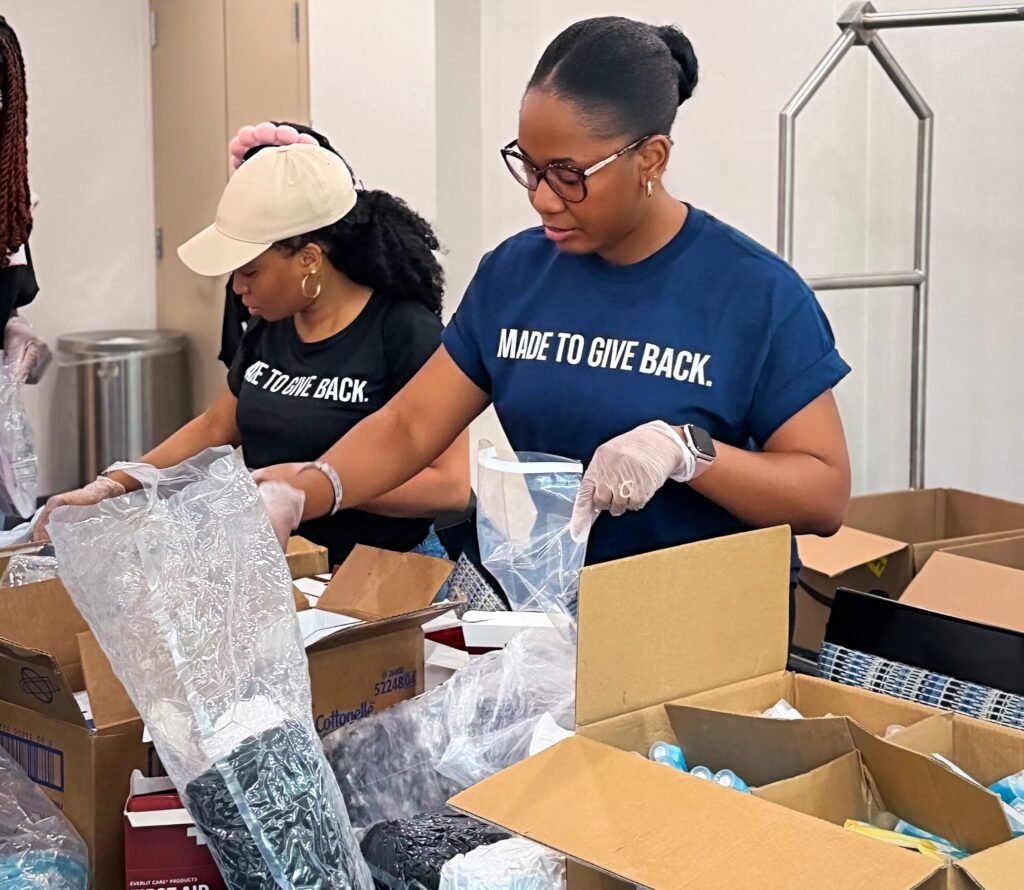
TH: What has been one of the most memorable experiences in your work with MEDGLOBE Initiative, and how has it shaped your understanding of the difference one intervention can make in a person’s life?
Kachi: One experience that has stayed with me is the feedback we received from a teacher who participated in our free BLS training in Abuja.
She told us that a child had fainted at her school and that, because of the training she had received, she was able to provide assistance before the child was taken to the hospital.
What made this particularly meaningful was that the impact extended beyond the training venue. We had trained participants, shared knowledge and completed a programme, but the real value became clearer when someone was able to apply what they had learned in a situation where another person needed help.
That feedback reminded me that the success of a health initiative should not be measured only by the number of people who attend, the resources distributed or the activities completed. Those numbers matter, but we should also ask what people are now able to do differently because of the intervention.
It reinforced my conviction that BLS education is worth expanding, especially among teachers and young people who may find themselves present when an emergency occurs. We cannot prevent every emergency, but we can help more people become better prepared to respond.
For me, this is what community impact looks like: equipping someone with knowledge that they can carry into their everyday life and use when it matters most. It is also why we want to expand this initiative and work with partners who share the vision of making lifesaving skills more accessible.
TH: As you work to expand access to BLS education in Nigeria, what are some of the biggest challenges you are navigating, and what kinds of partnerships or support would help MEDGLOBE Initiative reach more people?
Kachi: One of our biggest challenges is translating the need for lifesaving education into a programme that can be delivered consistently, safely, and at scale.
BLS training requires more than bringing people into a room and presenting information. Effective training needs appropriately qualified instructors, suitable equipment, practical demonstrations, adequate space, and a structure that allows participants to practise the skills being taught. There are also costs associated with materials, transportation, coordination, and follow-up.
Funding is therefore an important consideration. We want to make this education accessible to people who may not otherwise have the opportunity to receive it, but delivering quality training requires resources. As we work to expand the programme, we need to find ways to reduce financial barriers without compromising the quality or integrity of the training.
Partnerships are equally important. We would benefit from working with secondary schools that are willing to host training and support the establishment of BLS clubs; qualified BLS training providers who can support curriculum delivery and practical instruction; healthcare professionals who can volunteer their expertise; and organisations willing to support equipment, training materials, logistics, and programme expansion.
We are also interested in partnerships with corporate organisations, foundations, community groups, and institutions whose priorities align with health promotion, youth development, education, and community safety.
Our approach is to build the programme responsibly. We want to establish a sound foundation, learn from implementation, document outcomes, and use those lessons to inform future expansion.
Ultimately, we hope to create a model that can be adapted to more schools and communities over time. If we can help more young people and teachers acquire appropriate emergency-response skills, we will have contributed to a culture in which more people are prepared to act when someone needs help.
For organisations or individuals interested in supporting this work, we welcome conversations about collaboration, training resources, sponsorship, volunteer participation, and other practical ways to help expand access to lifesaving education in Nigeria.
TH: If you had the opportunity to be in a room with young Nigerians who want to make a difference in their communities but are unsure where to start, what would you want them to understand about using their knowledge, skills, and professional experience to solve problems around them?
Kachi: I would tell them that they do not need to wait until they have achieved a certain level of success, accumulated significant wealth, or secured the perfect opportunity before they can make a difference.
Start by paying attention to the needs around you.
You may notice that people in your community lack access to reliable health information. You may see young people who need mentorship, families who need support, or a problem that everyone acknowledges but few people are trying to solve.
Sometimes, the first step is simply being willing to ask questions, listen to the people affected, and understand what would genuinely help.
Then, look at what you already have.
Your education, professional skills, relationships, time, creativity, and lived experiences can all be useful. A pharmacist can contribute to health education. A teacher can help young people develop practical skills. An accountant can help a community organisation manage its finances. A technology professional can build tools that make services more accessible. You do not have to abandon your profession to contribute to your community; you can often use what you already know in a new and meaningful way.
That is part of what I have learned through my own journey. My background in pharmacy and clinical research has informed my approach to health advocacy, while my experience managing projects has helped me think about planning, accountability, and collaboration. MEDGLOBE Initiative has given me a way to bring those skills together in service of community needs.
Importantly, do not confuse impact with visibility. Not every meaningful contribution will receive recognition, and not every initiative will grow quickly. Some of the most valuable work happens quietly, through consistency and a willingness to keep showing up.
Finally, I would tell them not to underestimate the power of beginning. It does not mean that planning and resources are unimportant. It means that we should not allow the absence of perfect conditions to prevent us from taking a thoughtful first step.
You may not have all the answers today, but you can begin learning. You may not have all the resources, but you can identify what is possible. You may not be able to reach everyone, but you can start by serving someone.
And as you grow, build something that can continue beyond you. Seek collaboration, establish good systems, remain accountable, and create opportunities for others to contribute.
The goal is not simply to be known as someone who makes a difference. It is to help create change that continues to matter.